Ready mix concrete is a widely used construction material in modern building projects. It is produced in a controlled batching plant and delivered directly to the project site using mixer trucks. For readers who want to understand pricing and suppliers in Indonesia, you can also read the Indonesian guide on harga ready mix to get local market insights.
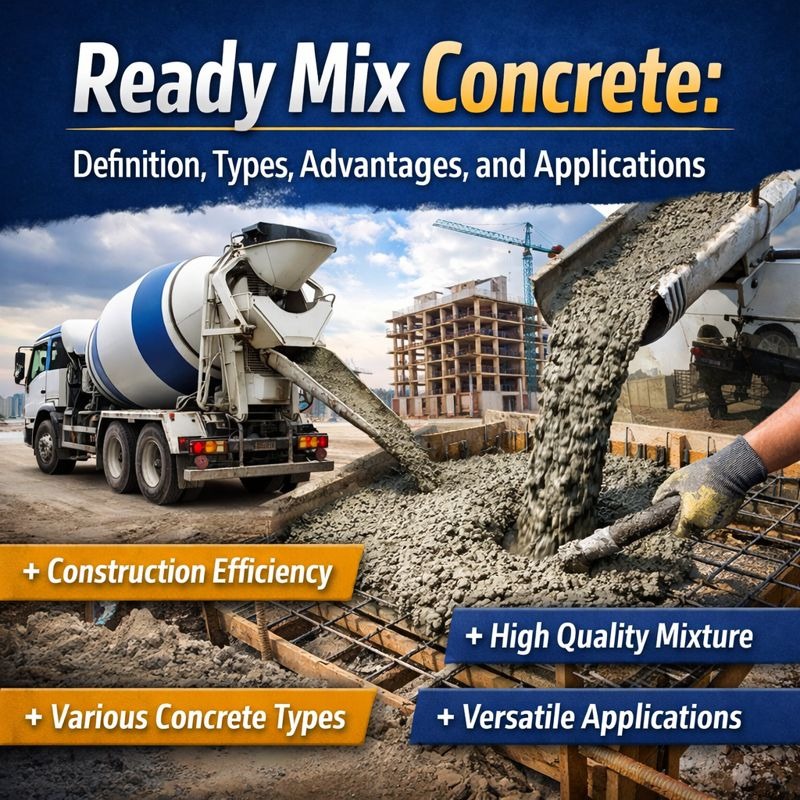
What Is Ready Mix Concrete?
Ready mix concrete refers to concrete that is manufactured based on a precise mix design and transported to the site in a fresh, workable condition. Compared to site-mixed concrete, ready mix concrete offers better quality control and consistency. In Indonesia, this system is commonly supported by large batching plant facilities that ensure stable concrete quality for various project scales.
Components of Ready Mix Concrete
Ready mix concrete consists of carefully measured materials, including cement, fine aggregates (sand), coarse aggregates (crushed stone or gravel), water, and admixtures. Each component plays an important role in achieving the required strength and durability. For a deeper explanation of concrete materials, readers can explore the Indonesian article about material beton cor ready mix.
Types of Ready Mix Concrete
1. Transit Mixed Concrete
Transit mixed concrete is mixed partially or fully inside the mixer truck during transportation. This method is suitable for projects that require flexibility in delivery time. In practice, transit mixed concrete is often delivered using truk mixer beton that keep the concrete homogeneous until pouring.
2. Central Mixed Concrete
Central mixed concrete is fully mixed at the batching plant before being loaded into the truck. This type provides high consistency and is ideal for large infrastructure projects. It is commonly associated with high-demand projects such as roads, bridges, and industrial floors, which are discussed further in Indonesian articles about beton cor proyek besar.
3. Shrink Mixed Concrete
Shrink mixed concrete combines the advantages of central mixed and transit mixed methods. The concrete is partially mixed at the plant and completed during transport. This method helps optimize delivery efficiency, especially for projects located at moderate distances from the batching plant.
Advantages of Ready Mix Concrete
Using ready mix concrete provides several advantages, including consistent quality, faster construction time, reduced labor needs, and lower material waste. These benefits make it a preferred solution for contractors. Many of these advantages are also explained in Indonesian resources about keunggulan beton ready mix for residential and commercial construction.
Applications of Ready Mix Concrete
Ready mix concrete is suitable for a wide range of construction applications such as residential houses, commercial buildings, warehouses, roads, and bridges. In housing projects, it is often combined with services like jasa gelar beton to ensure accurate placement and finishing.
Delivery and Transportation
Ready mix concrete is delivered using concrete mixer trucks equipped with rotating drums. Proper logistics planning is essential to maintain concrete quality during transport. For more technical details, readers can refer to Indonesian explanations about jenis truk mixer and their capacity options.
Tips for Choosing Ready Mix Concrete
Before ordering ready mix concrete, consider the required concrete grade, project volume, site access, and distance from the batching plant. Working with a reliable supplier is crucial, as discussed in Indonesian guides on supplier beton ready mix.
Additional Considerations for Construction Projects
In addition to quality and delivery, ready mix concrete also supports better project planning and cost control. Because the concrete is produced based on exact specifications, contractors can estimate material needs more accurately and avoid over-ordering. This precision helps reduce construction waste and supports more sustainable building practices. Ready mix concrete also improves site safety, as it minimizes on-site mixing activities and heavy material handling. As construction projects continue to demand efficiency, reliability, and environmental responsibility, ready mix concrete remains a key solution for modern and future developments.
Conclusion
Ready mix concrete is an efficient and reliable solution for modern construction projects. With controlled production, consistent quality, and flexible applications, it supports both small and large-scale developments. To maximize project results, it is recommended to understand local conditions, pricing, and delivery systems through related Indonesian construction articles linked throughout this page.